

By Maya Ellison ·
Why Am I Breaking Out After Dermaplaning?
This is one of the least satisfying things that can happen in a bathroom. The pass went well, the skin felt like glass that evening, and then two mornings later there are small raised spots along the jaw where the razor went. It is easy to conclude that dermaplaning simply does not agree with you, and that conclusion is almost always premature.
Because what changed was not only the fuzz. The blade, the pressure, the state of the skin before, the products after and the interval since the last session are all variables, and every one of them is adjustable. This guide walks those material factors one at a time, with the guidance from the American Academy of Dermatology named as we go, and ends at the line where a question stops being about technique.
What people describe after a session
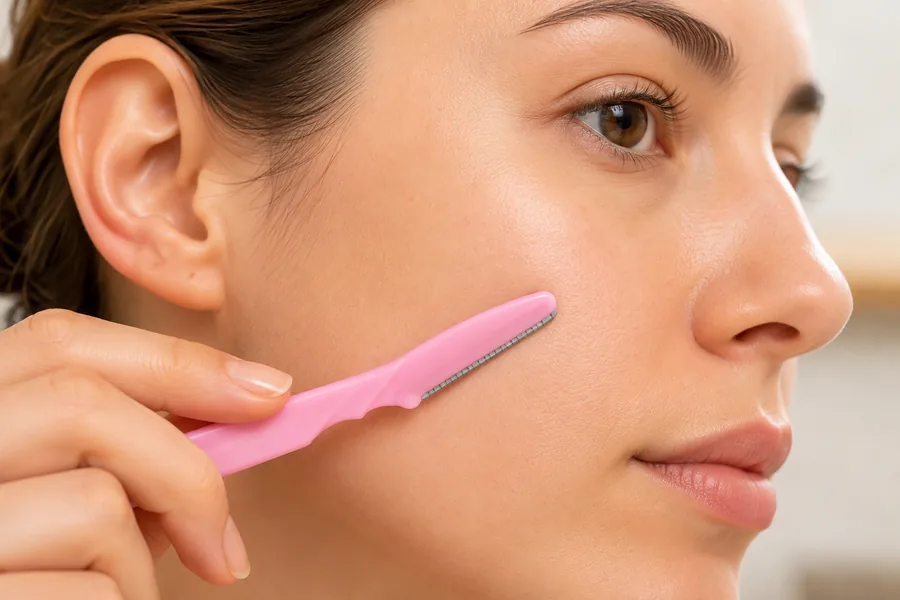
The reports are remarkably consistent. A flush of pink straight afterwards that fades within the hour. Then, on day one, two or three, small raised spots, usually in the zones that got the most attention: the jaw, the chin, sometimes the sides of the nose. Occasionally a patch that feels slightly tender to the fingertip rather than sore. Almost always in the area the blade covered, and almost never on skin it never touched.
That pattern is useful, because it says the cause is local and mechanical rather than something that arrived from nowhere. It is also why self-naming goes wrong so often. The American Academy of Dermatology says plainly that folliculitis usually looks like a sudden acne breakout, and that a board-certified dermatologist is the person who can tell you whether that is what you have.
The immediate pink is a separate story, covered in the section on handling irritation in is dermaplaning safe.
A fresh surface, and how soon you came back
Dermaplaning is exfoliation, and exfoliation has its own rules regardless of the tool. The American Academy of Dermatology is explicit that if you choose to exfoliate, it is important to do so safely so that it does not damage your skin or lead to increased redness or acne breakouts. Not a warning against exfoliating. A warning about how.
The same guidance names the failure mode most people fall into: be careful not to over-exfoliate, as this could lead to skin that is red and irritated. The Academy also says that, generally, the more aggressive the exfoliation, the less often it needs to be done. Read together, the frequency question stops being about a calendar and becomes one about recovery.
In practice this is the first thing to check, because it is the easiest to get wrong without noticing. A holiday, a big event, a run of mornings where the skin felt good enough to go again, and the interval quietly halves. Stretching it back out is usually the whole fix, and the intervals that suit different skin are in how often should you dermaplane.
The blade: reused, dulled, or put away damp
This factor has two separate halves.
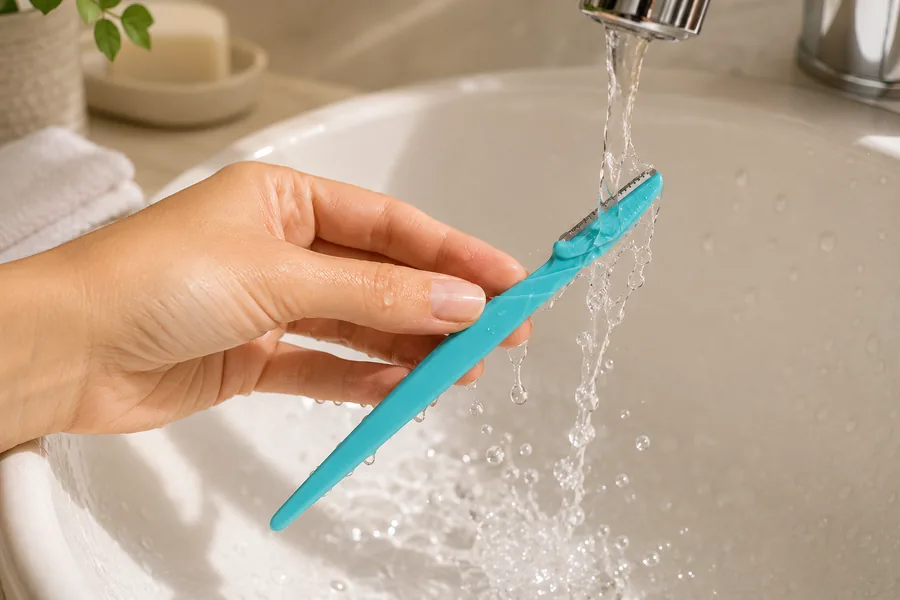
The first half is sharpness. The American Academy of Dermatology's shaving guidance opens with the simplest instruction on the page: use a razor with a sharp blade. An edge that has stopped being sharp drags, catches, and puts you in the position described in the next section: pressing harder to get the result you had last time. A razor that tugs has told you it is finished, and the signals that say so are laid out in how many times can you use a dermaplane razor.
The second half is where it lived between sessions, and it is the half almost nobody thinks about. The Academy's guidance says to make sure your razor dries completely between shaves to prevent bacteria from growing on it, to store it in a dry area, and not to leave it in the shower or on a wet sink. Rinse, dry, cap, and keep the pack somewhere the shower cannot reach.
A third rule follows from the same logic. In its list of habits that worsen acne, the Academy explains that sharing makeup, brushes or applicators can transfer another person's bacteria, oil and dead skin cells onto your skin, where they can clog pores. A facial razor is a personal tool for exactly that reason, and a multipack in assorted colours makes the bookkeeping automatic: one razor is yours, one is kept aside for brows, and a fresh one opens the moment the current edge drags.
Pressure, and the passes you did not plan
Pressure is the single most common technique fault, and it is a quiet one because it never feels like force at the time. It feels like thoroughness.
The Academy's position on mechanical force is not ambiguous. Scrubbing the skin clean is one of the ten habits it lists as worsening acne, and the explanation is one line long: scrubbing can irritate your skin, causing acne to flare. Its shaving guidance says to shave lightly to prevent nicks. Pressure buys you nothing at the surface and costs you at the follicle.
The related fault is repetition. Going back over the same centimetre because one hair survived turns a light pass into sustained rubbing on one small patch. If a hair is still standing, the answer is another light stroke, or a fresher blade, never a harder one. Direction matters too: the Academy says to shave in the direction that the hair grows. Grip, angle and stroke length are in how to use a dermaplane razor.
What went onto the skin next
The five minutes after a session decide a surprising amount, and this is where a good pass gets undone.
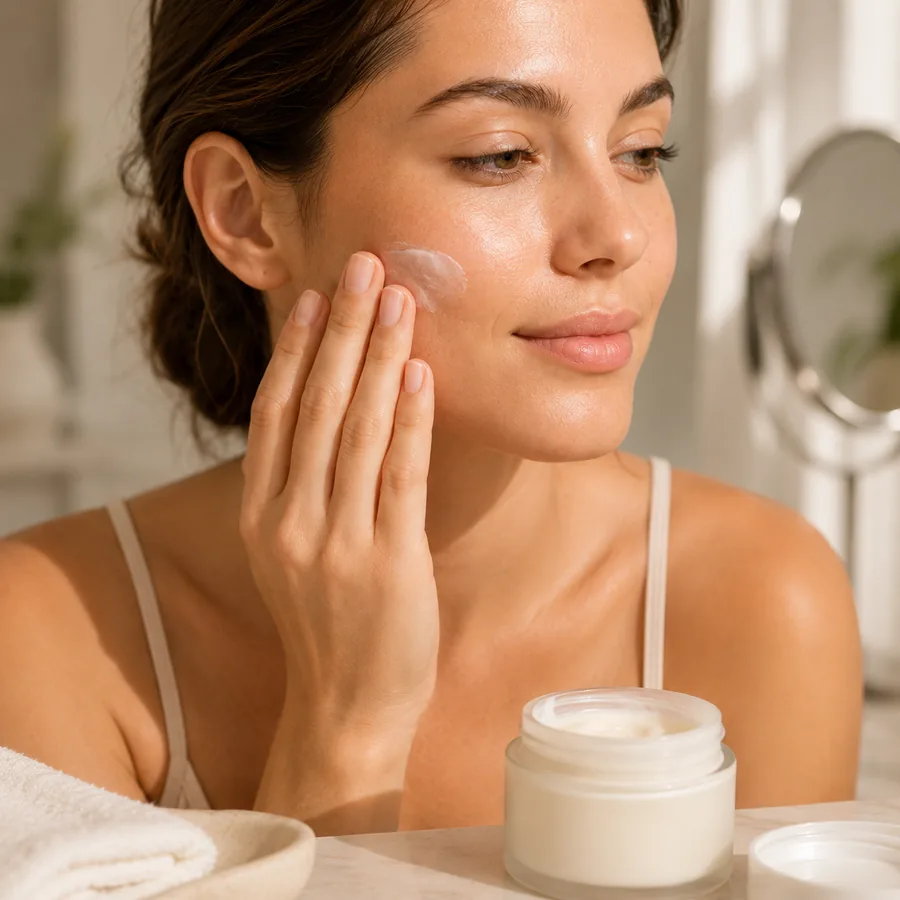
Start with what the Academy actually recommends, because it is the opposite of the instinct to let skin breathe: apply moisturizer immediately after exfoliating to keep your skin healthy and hydrated, since exfoliating can be drying to the skin. Skipping that step is not restraint, it is leaving the job half done.
Then the choice of product. In its habits list, the Academy is specific: makeup, skin care and hair care products can contain oil or other ingredients that cause breakouts, and it advises using only products labelled non-comedogenic or "won't clog pores". That label is doing real work on a freshly swept surface.
One caution belongs here because of the timing. The Academy's exfoliation guidance says some medications and over-the-counter products can make skin more sensitive or peel — it names prescription retinoid creams and products containing retinol or benzoyl peroxide — and that exfoliating while using them may worsen dry skin or even cause acne breakouts. That is reported as the Academy states it, not as a routine: what you use, and when, is a conversation for whoever recommended it. The aftercare sequence this site does recommend, moisturizer then broad-spectrum sunscreen, is in is dermaplaning safe.
Skin that was not ready, and hands that touch it
Two conditions come before the blade, and both are absolute.
The first is dry. Dermaplaning is done on clean, dry skin because that is what lets the edge skim, and there is a second reason: the Academy, writing about follicle damage, notes that when your skin is damp and hot it is easier to damage your hair follicles and get an infection. A pass straight out of a hot shower stacks both. The preparation, in order, is in how to dermaplane at home.
The second is calm. The Academy's exfoliation guidance is categorical: never exfoliate if you have open cuts or wounds or if your skin is sunburned. Its shaving guidance adds the instruction most often ignored in the moment — never try to shave off the acne, because shaving can irritate your skin and make acne worse. Work over clear zones. The full list of situations that mean waiting is the table in is dermaplaning safe.
Then there are the hands. Among the ways the Academy says hair follicles get damaged, the first one listed is touching or rubbing your skin frequently. That is the practical argument for washed hands, for resting your free hand above the working area rather than dragging it across, and for keeping a phone from pressing against a jaw you passed an hour ago.
Assorted shades in every multipack, so the razor in use is never confused with a sealed one or with someone else's
— Peachly product spec, 2026
Average rating left by verified buyers of the manual razors
— Peachly verified reviews, 2026
Money-back window on every order, enough to settle into a gentle interval on your own skin
— Peachly returns policy, 2026
Passing reaction, or a signal: where the line sits
Everything above is adjustable at home. This section is about the part that is not.
Take it to a board-certified dermatologist if the spots are still there after about a week, if they spread beyond the area the blade covered, if a patch becomes painful, warm or starts to weep, if the same reaction returns after every session however light the pass and however fresh the blade, or if you notice any change in a mole. Go sooner if you have a diagnosed skin condition or take medication that affects your skin. The Academy says the same from two directions: see a board-certified dermatologist if you have questions about exfoliating, or about how to shave or care for your skin.
A second caution comes straight from the Academy and is specific: it advises avoiding strong chemical or mechanical exfoliation if you have a darker skin tone or notice dark spots on your skin after burns, bug bites or breakouts, since more aggressive exfoliation can lead to increased pigmentation. If that describes your skin, a professional opinion on what suits you comes first.
And the thing not to do: name it yourself. The Academy notes that folliculitis usually looks like a sudden acne breakout, and that a dermatologist is who can confirm what you are looking at. Nothing here is medical advice. I am a beauty writer who has tested a lot of facial razors, not a dermatologist, and when the question is about your skin's health, the right person is the one who can see it.
For everything short of that line, the fixes above are small: a fresh edge, a lighter hand, dry skin, a longer gap, moisturizer straight after. Verified buyer Jessica M. described the feel to aim for in four words — "Does it's job, doesn't feel dull" — and more buyer reports are on the reviews page. The reusable multipacks, in assorted colours that make rotating to a fresh razor effortless, are on the dermaplane razor page.
Post-session questions, answered
How long do spots after a session usually last?
Most people describe something that settles over a few days as the surface recovers. The American Academy of Dermatology notes that the acne-like breakouts of folliculitis tend to go away on their own, and that a board-certified dermatologist is the one who can tell you whether that is what you are looking at. Still there after a week, spreading, or painful is the point to ask rather than guess.
Should I stop moisturizing so my skin can breathe?
No, and the guidance points the other way. The American Academy of Dermatology says to apply moisturizer immediately after exfoliating, because exfoliating can be drying to the skin. What matters is which product goes on: the Academy advises choosing ones labelled non-comedogenic, or "won't clog pores".
Can I dermaplane around the spots and leave them alone?
Working over clear zones only is what the safety guide describes, and the American Academy of Dermatology is direct about the rest: shave lightly to prevent nicks, and never try to shave off the acne, as both can make acne worse. Keep the pass to skin that is calm.
Does a fresh razor really change anything?
It changes the two things you control most. A sharp edge skims instead of dragging, so you are not tempted to press or repeat a pass, and an unopened razor has not been sitting damp. The American Academy of Dermatology advises using a razor with a sharp blade, and letting one dry completely between uses to prevent bacteria from growing on it.
Maya Ellison · Beauty writer & at-home dermaplaning enthusiast
Maya has tested dozens of facial razors and writes practical, plain-spoken at-home skincare guides. She is not a dermatologist, so for any medical skin concern she points readers to a professional.